** ## - What Affects Software Development Cost in Nigeria? ** When a business asks a software development company for a price, it's easy to expect a simple answer.
For example:
"How much does it cost to build business software?"
But a developer needs more information before giving a useful estimate.
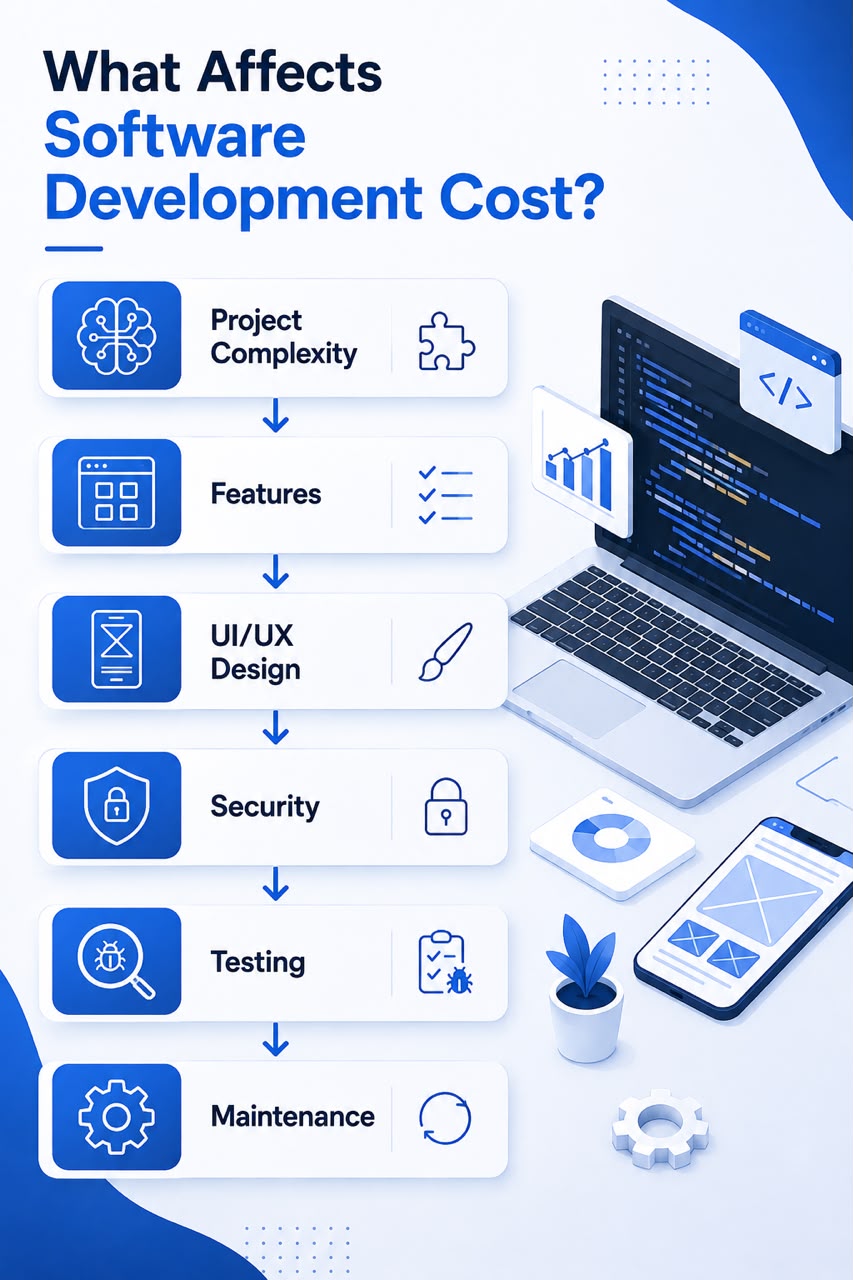
The cost of software isn't determined by one thing. Several parts of the project work together to determine how much time, skill, testing, and resources are required.
Tech Resonate provides software development services for businesses and organisations, including web applications, business systems, school portals, inventory tools, SaaS products and internal tools.
Here are some of the biggest factors.
1. Project Complexity
The complexity of the project is usually one of the first things that affects the price.
A simple application with a few screens and basic functions doesn't require the same amount of work as a large platform with different user types, automated processes, reporting, integrations, and complex business rules.
For example, a small inventory system might allow staff to:
Add products Record sales Check stock levels View basic reports
A larger system could also include:
Multiple branches Different staff permissions Supplier management Automatic stock alerts Accounting integration Customer accounts Detailed analytics Mobile access
Both are inventory systems, but the amount of development required is very different.
The more complicated the workflow, the more development time the project usually requires.
2. Features and Functionality
The features you want are another major part of the cost.
A useful way to approach a software project is to separate the features into two groups:
What do we need now?
and
What would be useful later?
Trying to build everything at once can increase the initial cost and make the project harder to manage.
For a new business, it may make more sense to start with the features that solve the most important problem and add others as the business grows.
This is often called building a Minimum Viable Product (MVP).
An MVP isn't necessarily a poor-quality product. It simply means starting with the core features needed to test the idea or operate the business before investing heavily in additional features.
3. UI/UX Design
Software isn't only about what happens behind the scenes.
People also need to be able to use it comfortably.
UI (User Interface) deals with how the software looks, while UX (User Experience) focuses more on how people interact with it.
A business application may have excellent technical functionality but still frustrate users if:
Menus are confusing Important information is difficult to find Forms are unnecessarily complicated The mobile experience is poor Different parts of the system don't follow the same design
Good UI/UX planning can therefore become an important part of a software project.
The amount of design work required depends on the size and type of application.
4. Platforms and Devices
Where your software will run also affects the project.
A web application may work through a browser, while another project may require Android and iOS applications as well.
For example, a business might request:
Web application Android application iPhone application Admin dashboard
That's a considerably larger project than building a single web application.
Before development starts, it's worth deciding where your users actually need to access the software.
Sometimes a responsive web application is enough. In other situations, dedicated mobile applications make more sense.
5. Integrations With Other Systems
Many modern applications don't operate by themselves.
They need to communicate with other services.
For example, a Nigerian business might need software connected to:
Payment services SMS platforms Email services Accounting software Maps Customer relationship management systems Existing business databases Authentication services
These integrations can add development and testing work because the systems need to communicate correctly and securely.
The number and complexity of integrations can therefore have a noticeable effect on the overall project.
6. Security Requirements
Security becomes even more important when software handles sensitive information.
A system containing customer records, financial information, employee information, health records, or other private data needs to be designed with appropriate security measures.
Depending on the project, this could involve things such as:
Secure authentication User permissions Data protection Secure APIs Backups Access controls Security testing Monitoring
The level of security required will depend on what the software does and what information it handles.
Security shouldn't be treated as an optional feature that gets added after everything else is finished. It should be considered during the planning and development process.
Source: NIST Secure Software Development Framework (SSDF)
7. Testing
Software can look finished while still having problems that aren't immediately visible.
Testing helps developers identify issues before users depend on the system.
A project may require testing for:
Functionality User experience Mobile responsiveness Performance Security Different browsers and devices Payment processes User permissions
The larger the application, the more areas there are to test.
Skipping proper testing may save time at the beginning, but it can create much bigger problems after launch.
8. Maintenance and Future Updates
Another cost that businesses sometimes forget is what happens after the software launches.
Software isn't usually something you build once and never touch again.
Businesses change. Customers' expectations change. Operating systems are updated. Security threats evolve. Third-party services change their APIs.
Your software may therefore need:
Bug fixes Security updates Performance improvements Server maintenance New features Database maintenance Compatibility updates
This doesn't mean maintenance will always be expensive. It simply means businesses should plan for the software's life after launch.
9. Development Timeline
The amount of time available to build the software can also affect the project.
A normal project may have enough time for planning, design, development, testing, and deployment.
But if a business needs a large system completed within a very short deadline, additional developers or resources may be needed to meet the target.
A rushed project can also create unnecessary pressure on testing and quality.
That's why it's better to discuss the expected timeline early rather than choosing an unrealistic launch date after development has already started.
Why You Shouldn't Choose a Software Company Based Only on Price
When comparing software development companies in Nigeria, price will naturally be part of the conversation.
But it shouldn't be the only thing you consider.
Two companies can give completely different quotes for what appears to be the same project.
That doesn't automatically mean one company is overcharging.
One quote might include:
UI/UX design Testing Security Deployment Documentation Maintenance
while another might only cover the initial coding.
Before comparing prices, make sure you're actually comparing the same scope of work.
A cheaper quote can become much more expensive later if important parts of the project weren't included from the beginning.
A Better Way to Think About Software Cost
Instead of asking only:
"How much does software development cost?"
try asking:
"What do we need this software to accomplish?"
Once the business problem is clear, it's easier to determine:
Who will use the software What features are necessary What platforms are required What integrations are needed What level of security is appropriate How long development may take What ongoing support will be required
That gives a development company enough information to provide a much more realistic estimate.
And more importantly, it helps you avoid paying for features that your business doesn't actually need.